Craft a Winning Sample Content Strategy for DTC Brands

Introduction
Crafting a compelling content strategy is absolutely vital for direct-to-consumer (DTC) brands eager to thrive in today’s competitive marketplace! With the right approach, these brands can skyrocket their visibility and supercharge customer engagement and conversion rates. But here’s the catch: the real challenge lies in aligning content with specific business goals while genuinely understanding the audience's needs and preferences. So, how can DTC companies effectively navigate this landscape to create a content strategy that truly resonates and drives impressive results? Let’s dive in!
Define Goals and Understand Your Audience
To create a winning sample content strategy, DTC companies need to kick things off by setting clear, measurable objectives that resonate with their broader business goals - think conversion optimization! These objectives might include:
- Boosting brand awareness
- Driving traffic to the website
- Ramping up conversion rates through killer landing pages and savvy post-purchase upsells
Once those goals are locked in, it’s time to dive deep into audience research. Understanding your target demographics, their preferences, and pain points is crucial. Tools like surveys, social media analytics, and customer feedback can unlock invaluable insights. For instance, a brand like ZYN Turmeric might discover that their audience is passionate about health benefits and sustainability, allowing them to tailor their messaging to spotlight these themes.
Consider this: a case study of a DTC company that implemented conversion rate optimization tactics saw a staggering 30% increase in conversion rates after aligning their content with audience insights. That’s the kind of impact you want! Plus, incorporating strategies like Shopify stack audits can supercharge the efficiency of your sample content strategy.
By harmonizing your materials with both your objectives and audience insights, you can craft resources that are not just relevant but truly captivating - driving the results you crave. Don’t wait; start aligning your strategy today!

Conduct Content Audits and Competitive Analysis
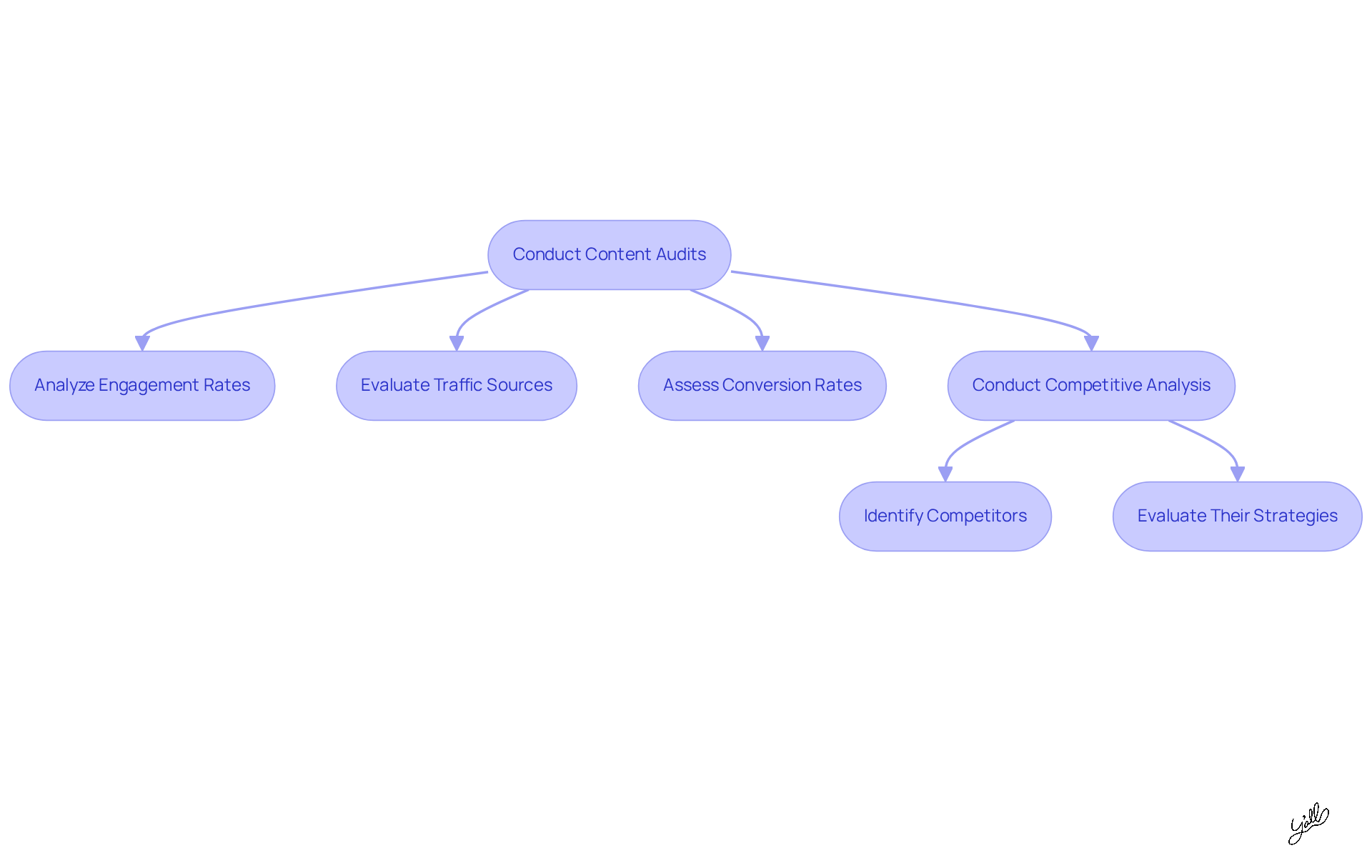
DTC companies, listen up! It’s time to take your offerings to the next level by routinely auditing your materials. This isn’t just a suggestion; it’s a necessity! Dive into the metrics - engagement rates, traffic sources, conversion rates - and uncover what’s working and what’s falling flat. But don’t stop there! A competitive evaluation can reveal how your rivals are positioning their materials. For example, if a competitor is nailing it with influencer collaborations, why not consider adopting similar strategies?
Tools like SEMrush or Ahrefs are your allies in this journey, helping you dissect competitors' approaches and pinpoint gaps in your own methods. By understanding both your material performance and the competitive landscape, you’re not just gathering data; you’re empowering your company to make informed, strategic choices. So, let’s get to it! Now is the time to enhance your sample content strategy!
Establish a Content Calendar and Workflow
To ensure a steady flow of captivating content, DTC companies must create a dynamic schedule as part of their sample content strategy that outlines what will be published, when, and on which platforms. This calendar should sync perfectly with marketing campaigns, product launches, and seasonal events, creating a buzz that can’t be ignored!
Tools like Trello or Asana are game-changers for managing workflow, empowering teams to collaborate seamlessly. Imagine a company utilizing a sample content strategy by orchestrating a series of engaging blog posts leading up to a product launch, ensuring every piece of content is not just cohesive but strategically timed to maximize impact!
Plus, integrating a review process into the workflow is essential for maintaining quality and consistency. By sticking to a clear schedule and efficient workflow, companies can supercharge their production efficiency and smash their marketing goals!

Measure Performance and Revise Strategies
To supercharge material performance, DTC brands need to harness the power of strong analytics! By keeping a close eye on key performance indicators (KPIs) like engagement levels, click-through percentages, and conversion figures, brands can unlock incredible insights. Tools such as Google Analytics and social media insights provide invaluable data on content effectiveness. Just look at your collaboration with OceanBlue - it led to a staggering 70% rise in engagement and a 50% drop in bounce figures! That’s the kind of impact strategic improvements can have.
Similarly, Sijo saw a remarkable 15% decrease in customer acquisition costs and a 27% boost in click-through rates after teaming up with Y'all to refine their brand messaging and digital marketing campaigns. If a particular blog post is driving tons of traffic but conversions are lagging, it’s a clear sign that more compelling calls to action or better alignment with audience preferences are needed. Brands must stay agile, ready to pivot based on these insights.
Experimenting with different formats and distribution channels is key to discovering what truly resonates with your audience. By consistently measuring performance and adapting their sample content strategy - just like Y'all's successful case studies - brands can ensure their content remains not just relevant, but also incredibly effective. Don’t wait! Start making those adjustments today!

Conclusion
Crafting a successful sample content strategy for DTC brands isn’t just important; it’s essential for driving engagement and smashing business objectives! By clearly defining goals, understanding your target audience, and aligning content with their needs, you can create compelling narratives that truly resonate and convert. This strategic approach not only boosts brand awareness but also fosters customer loyalty and skyrockets conversion rates.
Key insights from the article highlight the critical need for thorough content audits and competitive analyses. By regularly evaluating performance metrics and staying ahead of industry trends, you can pinpoint gaps in your strategies and adapt like a pro. Establishing a well-structured content calendar and workflow ensures that your content is timely, relevant, and impactful, leading to a more cohesive marketing strategy that stands out!
In a fast-paced market, the ability to measure performance and revise strategies is crucial for sustained success. DTC brands must embrace analytics and stay flexible, experimenting with different formats and channels to discover what resonates best with their audience. By committing to these best practices, you can not only enhance your content strategies but also secure a competitive edge in the direct-to-consumer landscape. Don’t wait - take action now and elevate your brand to new heights!
Frequently Asked Questions
What are the initial steps to create a successful content strategy for DTC companies?
The initial steps include defining clear, measurable objectives that align with broader business goals, such as boosting brand awareness, driving website traffic, and increasing conversion rates.
Why is understanding the audience important in content strategy?
Understanding the audience is crucial because it helps identify target demographics, preferences, and pain points, allowing companies to tailor their messaging effectively.
What tools can be used for audience research?
Tools for audience research include surveys, social media analytics, and customer feedback, which can provide valuable insights into audience interests and behaviors.
Can you provide an example of how audience insights can impact conversion rates?
Yes, a case study of a DTC company that implemented conversion rate optimization tactics showed a 30% increase in conversion rates after aligning their content with audience insights.
What additional strategies can enhance a sample content strategy?
Incorporating strategies like Shopify stack audits can enhance the efficiency of a sample content strategy.
How can aligning content with objectives and audience insights benefit a company?
Aligning content with objectives and audience insights allows companies to create relevant and captivating resources, ultimately driving better results.