Understanding Content Strategy in Digital Marketing for DTC Brands

Introduction
In the exhilarating world of digital marketing, the importance of a well-defined content strategy is absolutely crucial, especially for direct-to-consumer (DTC) brands. Crafting content that truly resonates with your target audience while aligning with your business goals is the key to unlocking success. As the DTC landscape rapidly evolves, companies are not just challenged to keep pace; they must thrive in the face of fierce competition.
So, how can brands tap into the power of innovative content strategies to build loyalty and drive conversions in this ever-changing environment? It's time to take action!
Defining Content Strategy in Digital Marketing
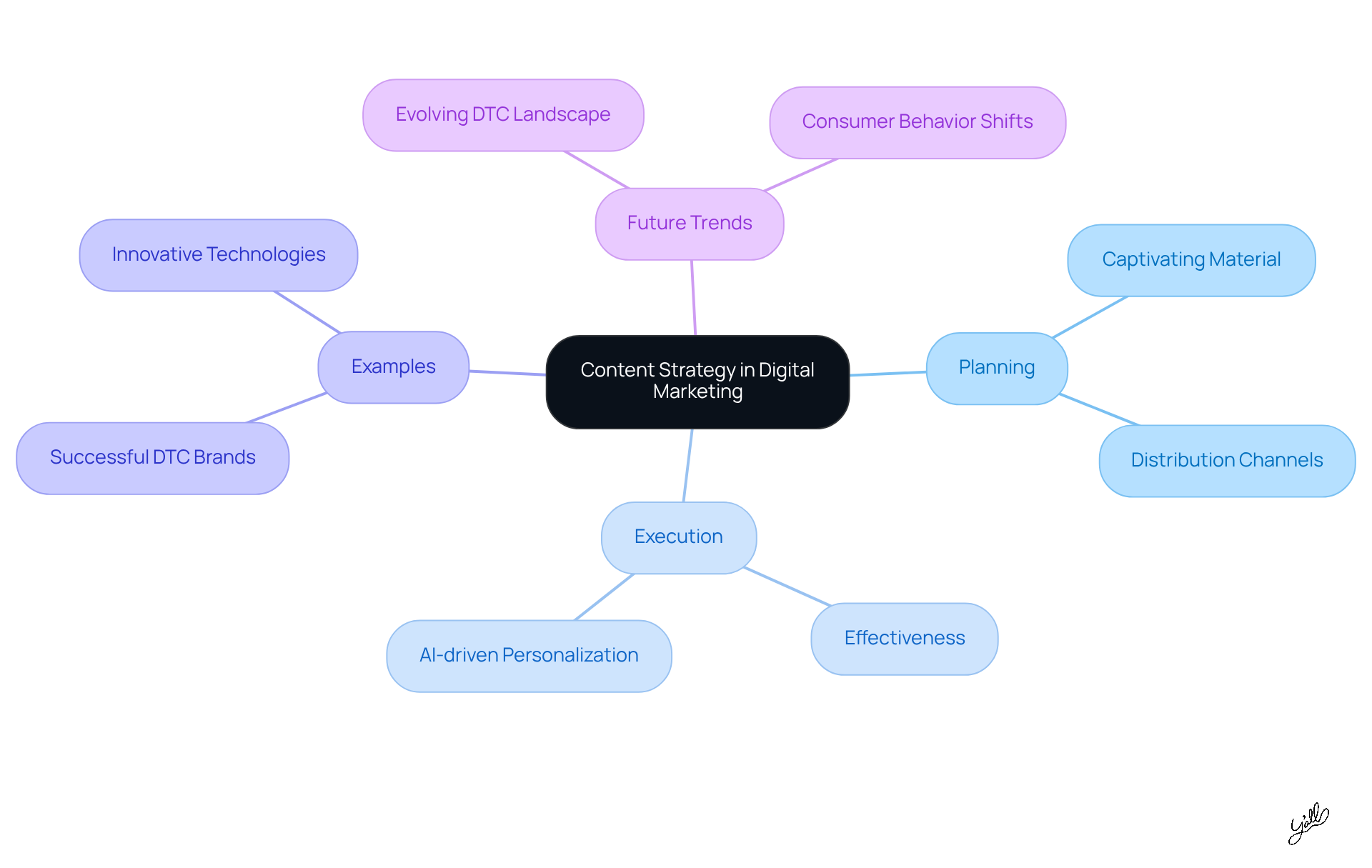
In the dynamic world of digital marketing, every step counts! It’s all about meticulous planning, development, and management of a content strategy digital marketing that not only aligns with your business goals but also speaks directly to your target audience. Think about it: captivating material, the perfect distribution channels, and a keen eye on effectiveness - these are the cornerstones of a winning strategy!
For direct-to-consumer (DTC) companies, having a robust information strategy is absolutely crucial. Why? Because it builds a strong identity, fosters customer loyalty, and drives conversions. As we look ahead to 2025, the DTC landscape is evolving rapidly. Companies must recognize that every element of their content strategy digital marketing needs to serve a purpose - whether it’s to inform, engage, or persuade potential customers.
Take Y'all's hybrid buying-creative model, for example. It brilliantly integrates media buying with strategic creative solutions, enhancing engagement and slashing bounce rates. Marketers are increasingly turning to innovative technologies and AI-driven personalization to boost relevance and effectiveness, ensuring their strategies resonate with the audience.
Look at the successful examples from consumer packaged goods companies! They show us that a well-executed approach can lead to remarkable improvements in engagement and conversion rates, paving the way for sustained growth in a fiercely competitive market. Now is the time to act - embrace these strategies and watch your business thrive!
The Evolution and Importance of Content Strategy
The concept of material strategy has experienced a remarkable shift, moving from conventional marketing tactics to a dynamic digital framework. Initially, material served primarily as a marketing tool. But with the rise of the internet and social media, the focus has pivoted towards creating valuable and relevant content that truly engages consumers. This transformation is especially crucial for direct-to-consumer (DTC) companies, empowering them to build direct connections with their audiences, foster trust, and elevate customer experiences.
As we look ahead to 2025, having a robust communication strategy isn’t just an option; it’s a vital necessity for DTC companies. It plays an essential role in boosting visibility and nurturing customer loyalty in an increasingly competitive landscape. Did you know that:
- 89% of B2B marketers are sharing content through social media?
- 90% of consumers depend on online reviews?
This highlights the urgent need for a well-crafted distribution plan as part of a content strategy digital marketing approach. It’s key to achieving sustainable growth and maintaining a competitive edge. Don’t wait-embrace this evolution and watch your brand thrive!

Key Components of an Effective Content Strategy
An effective content strategy digital marketing for DTC brands is not just important; it's essential! Let’s dive into the key components that can elevate your brand to new heights:
-
Viewer Analysis: Understanding your target audience's preferences, behaviors, and challenges is crucial for crafting relevant content. Marketing professionals know that when you truly understand your audience, you can create personalized experiences that resonate deeply. This connection fosters loyalty and engagement like nothing else!
-
Objectives: Setting clear goals - whether it’s boosting visibility or driving sales - is vital for steering your content creation efforts. Your objectives should align with your company’s overarching strategy and adapt to the ever-evolving DTC landscape. Every piece of content must serve a purpose, driving you closer to your goals!
-
Formats: Embrace a diverse mix of formats - think blogs, videos, social media updates, and email newsletters! This variety not only keeps your audience engaged but also amplifies your brand’s visibility across multiple platforms. Keep it fresh and exciting!
-
Distribution Channels: Choosing the right platforms for your content distribution is key to maximizing reach and engagement. Whether it’s social media, email, or your website, make sure you’re utilizing channels that resonate with your audience. Accessibility and impact are your best friends here!
-
Measurement and Analytics: Regularly evaluating your performance through metrics like engagement and conversion rates is essential for refining your strategies and boosting results. By tracking these vital metrics, DTC brands can make data-driven decisions that enhance their content strategy digital marketing effectiveness and improve overall marketing ROI.
Looking ahead to 2025, successful DTC companies will prioritize consumer research to shape their messaging strategies. This ensures they meet the evolving expectations of consumers who increasingly crave personalized and relevant interactions. Case studies reveal that brands leveraging consumer insights achieve significantly higher engagement and retention rates. This highlights the importance of a comprehensive approach to content - don’t miss out on this opportunity!

Examples and Variations of Content Strategies
DTC companies are making waves with innovative messaging strategies that truly resonate with their audiences! Take Glossier, for instance. They shine by leveraging user-generated content, creating a vibrant community where customers eagerly share their product experiences on social media. This approach not only enhances authenticity but also builds a fiercely loyal customer base.
Then there's Warby Parker, who masterfully employs storytelling in their blog. By sharing heartfelt customer narratives and insights into their core values, they forge emotional connections that make the brand relatable and trustworthy.
And let’s not forget Dollar Shave Club! Their humorous video content is a game-changer, delivering messages in a light-hearted way that captivates viewers. This delightful mix of entertainment and information not only grabs attention but also boosts product recall.
In a similar spirit, Y'all is revolutionizing the digital marketing scene for DTC companies. They’re enhancing engagement and slashing bounce rates with strategic performance marketing solutions. Their partnership with OceanBlue led to an astounding 70% rise in engagement and a 50% drop in bounce rates! This success showcases the power of their tailored approaches. Client testimonials further highlight Y'all's commitment to understanding and addressing the unique needs of each company, solidifying their status as a leader in innovative performance creative strategies.
These examples vividly illustrate the diverse paths DTC brands can take in developing their content strategy digital marketing. They underscore the critical importance of creativity and aligning with the audience's desires. So, let’s get inspired and take action now!

Conclusion
In the vibrant world of digital marketing, especially for direct-to-consumer (DTC) brands, a well-defined content strategy is not just important - it's essential for success! This approach not only amplifies brand identity and fosters customer loyalty but also drives conversions by ensuring that every piece of content serves a strategic purpose. As the DTC landscape evolves at lightning speed, it’s crystal clear: brands must prioritize their content strategies to effectively engage their audiences and stay ahead of the competition.
This article shines a spotlight on several key components that are vital for crafting an effective content strategy:
- Understanding your target audience through viewer analysis
- Setting clear objectives that align with broader business goals
- Utilizing diverse content formats
- Selecting the right distribution channels
- Measuring performance through analytics
Each of these elements is crucial in creating content that truly resonates with consumers. This ultimately leads to improved engagement and skyrocketing conversion rates!
Looking ahead, it’s evident that the future of DTC marketing will hinge on the ability to adapt and innovate within content strategies. Brands are encouraged to unleash their creativity and leverage consumer insights to forge deeper connections with their audiences. By doing so, they can not only boost their marketing effectiveness but also pave the way for sustainable growth in a rapidly changing market. Now is the time to take action! Refining and implementing a robust content strategy could be the key to unlocking your brand's full potential.
Frequently Asked Questions
What is the importance of a content strategy in digital marketing?
A content strategy in digital marketing is crucial as it aligns with business goals and directly addresses the target audience, focusing on captivating material, effective distribution channels, and measuring effectiveness.
Why is a robust information strategy essential for direct-to-consumer (DTC) companies?
A robust information strategy is essential for DTC companies because it builds a strong identity, fosters customer loyalty, and drives conversions, which are vital for success in a rapidly evolving market.
What are the key components of a successful content strategy?
Key components of a successful content strategy include captivating content, appropriate distribution channels, and a focus on effectiveness to inform, engage, or persuade potential customers.
How does Y'all's hybrid buying-creative model enhance engagement?
Y'all's hybrid buying-creative model enhances engagement by integrating media buying with strategic creative solutions, which helps reduce bounce rates and improves overall effectiveness.
What role do innovative technologies and AI play in content strategies?
Innovative technologies and AI-driven personalization play a significant role in content strategies by boosting relevance and effectiveness, ensuring that the strategies resonate with the audience.
What can be learned from successful examples in consumer packaged goods companies?
Successful examples from consumer packaged goods companies demonstrate that a well-executed content strategy can lead to significant improvements in engagement and conversion rates, contributing to sustained growth in a competitive market.