Client Background and Challenges
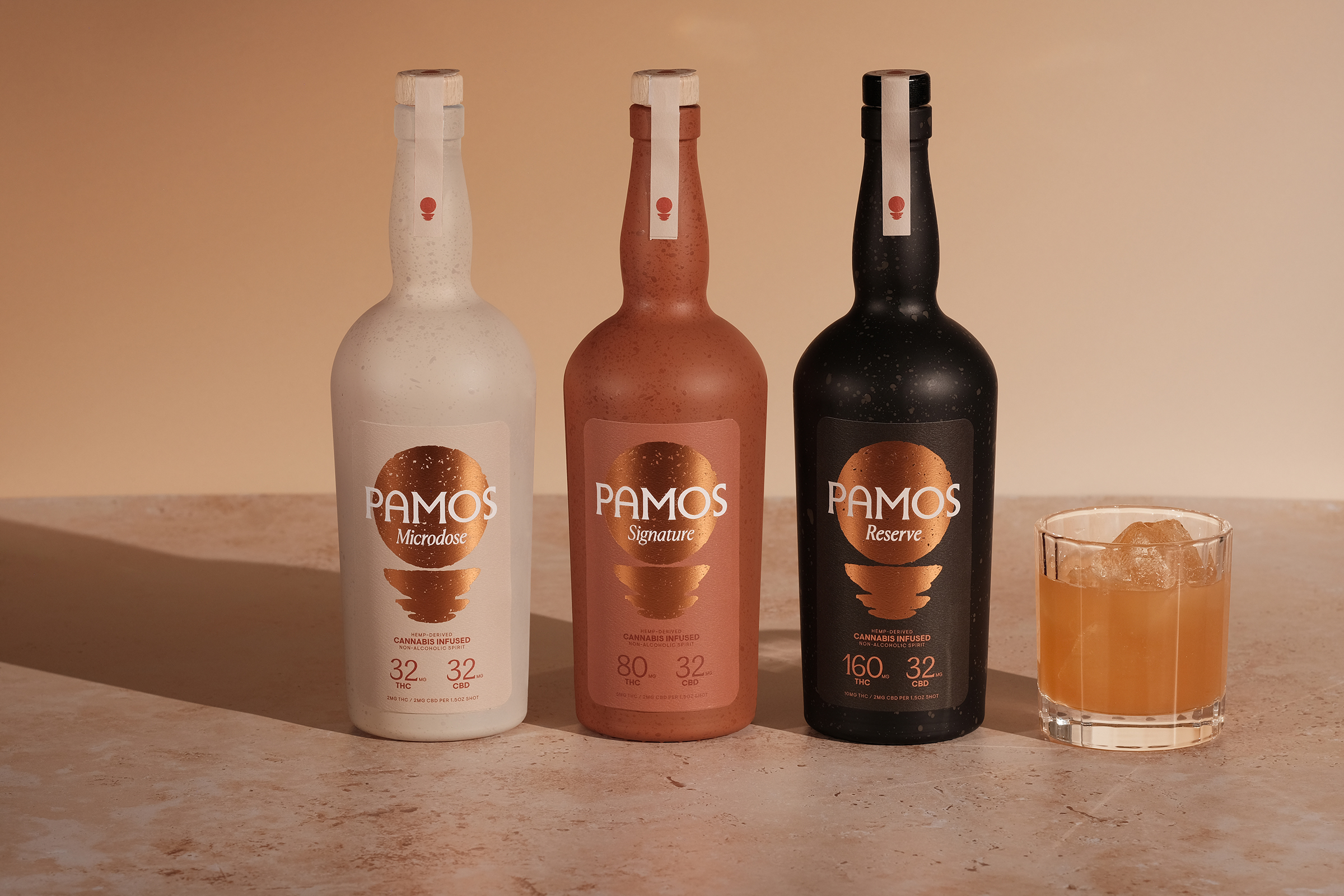
Pamos is a California-based cannabis beverage brand built for people who care about cocktail culture. The product is premium, the aesthetic is elevated, and the target customer isn't a typical cannabis consumer. They wanted a marketing partner who could scale them across paid channels without getting their accounts shut down, which had already happened twice.
For THC brands, a ban shuts down revenue. Accounts go down, sales drop to zero, and retail partnerships get squeezed. Pamos needed someone who understood platform compliance all the way down to the code and metadata. They also needed positioning work. Most cannabis beverages lead with "alcohol is the enemy" messaging, which alienates the buyer who wants an additional option for unwinding rather than a full swap.
Outcome
Within three months, we grew Pamos's monthly ad spend from $10,000 to $90,000 while cutting cost per acquisition by 49%. ROAS improved 90% as the budget scaled, which usually doesn't happen when spend grows aggressively. CPC dropped 27% on the back of the creative and targeting work.
On Google alone, we generated over $500,000 in revenue from $200,000 in ad spend, despite the product being explicitly prohibited from advertising on the platform. And zero account bans across the engagement. After two consecutive bans before we came on, the compliance infrastructure held through 9x scaling.
9x ad spend growth in 3 months ($10k to $90k monthly)
49% decrease in Cost Per Acquisition
Zero account bans since working with Y’all (after 2 consecutive bans prior)

Y'all essentially acted as an extension of our internal marketing team. They were extremely responsive and knowledgeable, and had no problem pivoting as our goals changed. Not only are they good at what they do, they're great folks to work with. My team truly enjoyed all of our interactions and looked forward to our weekly meetings.
Y'all essentially acted as an extension of our internal marketing team. They were extremely responsive and knowledgeable, and had no problem pivoting as our goals changed. Not only are they good at what they do, they're great folks to work with. My team truly enjoyed all of our interactions and looked forward to our weekly meetings.
Creative
.webp)

How Y'all Did It
Restricted Category Compliance Infrastructure
The compliance work came first. For a THC brand, no other lever matters if the account goes down. We built protocols for creative, landing pages, and the technical stack underneath, including code, metadata, and URL structures. Google scans two layers deep into the funnel. Meta scans one. Different departments inside Google (Search, Display, YouTube, Shopping, Merchant Center) apply different scrutiny standards, and we had to account for each one. We also built backup account infrastructure so a single platform issue couldn't take the business offline.
Multi-Platform Expansion Into Display and YouTube
With the compliance foundation locked in, we pushed into territory most THC brands can't touch. Display and YouTube campaigns for cannabis beverages are effectively impossible when the creative hasn't been built with platform review in mind. Visual content invites closer inspection, and the rejection rate on bottle shapes that resemble alcohol or imagery that suggests intoxication is brutal. We got them running and kept them running. On Google, we also identified competitor brand terms where the established cannabis beverage players had either chosen not to advertise or couldn't figure out how. That opened up high-intent search traffic at lower cost, buyers already in-market for the category.
Positioning-Driven Creative Strategy
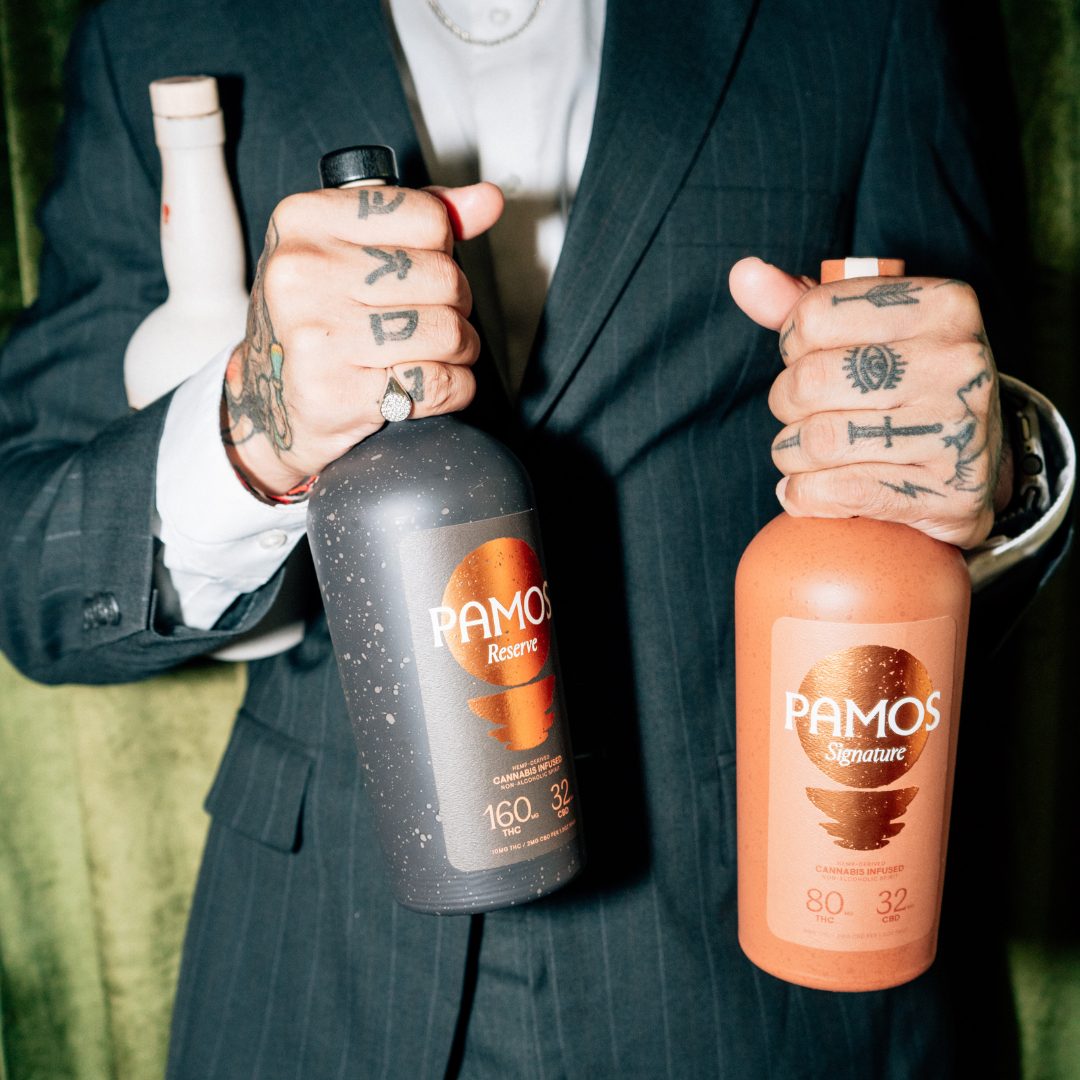
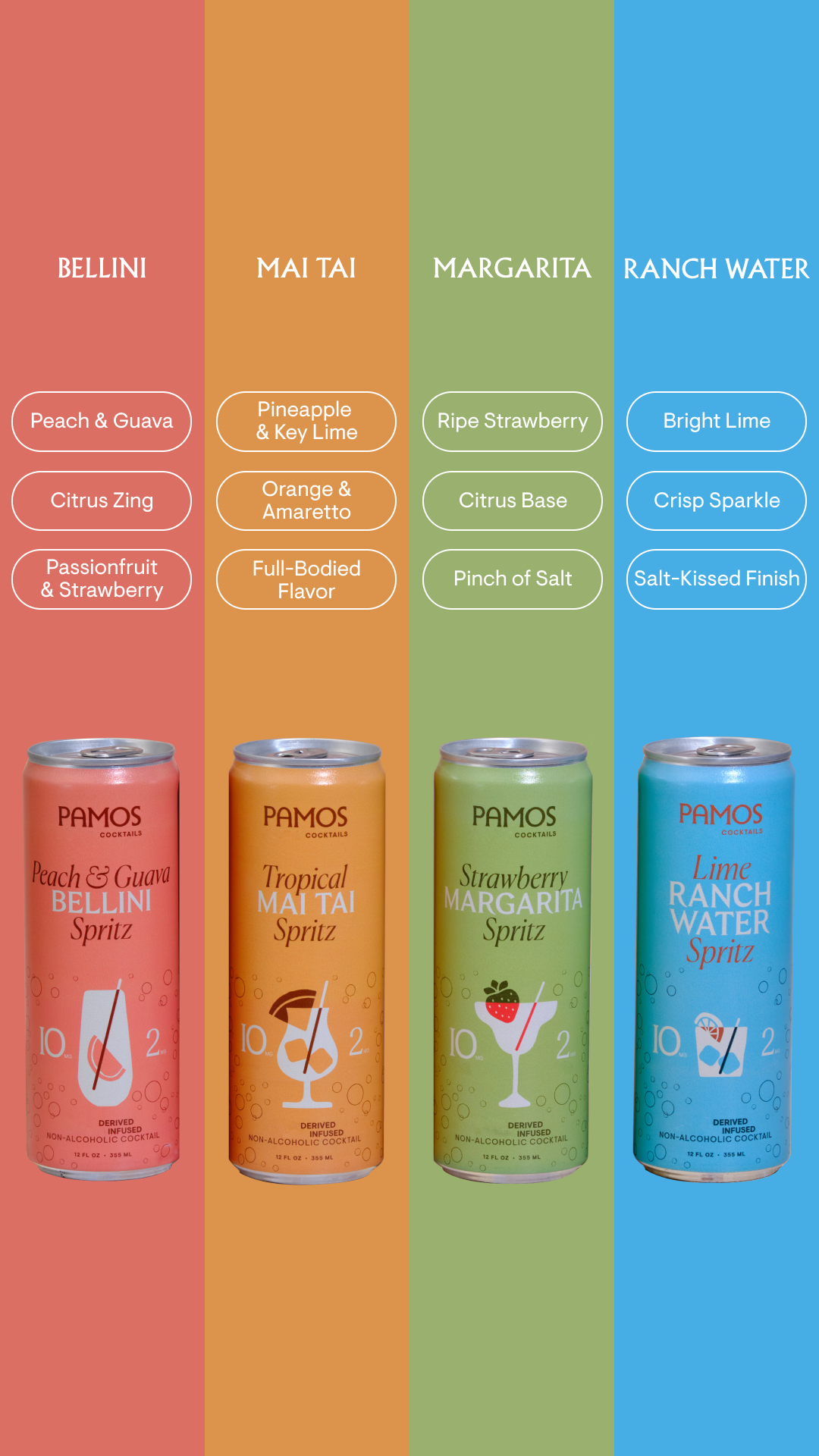
The creative strategy leaned into Pamos's actual positioning. Sophisticated, elevated, something to add to a night out rather than replace alcohol entirely. We built creative around microdosing and controlled experiences for people who value cocktail culture. Aesthetics pulled toward sunset vibes and evening rituals instead of dispensary energy. Systematic testing across messaging, imagery, and value props found the angles that resonated with that specific buyer.
UGC Integration Across Paid Channels
UGC went into the mix across paid social and search, and the authenticity delta over brand-shot creative was substantial. Real customer voices carried credibility the brand-shot creative couldn't match, particularly for a category where first-time buyers look to others' experiences before committing.
Conversion Infrastructure and Tracking
Conversion tracking and landing page work closed the loop. We resolved tracking issues that had been masking performance, rebuilt landing pages so they balanced compliance with conversion, and restructured offers and bundles to support the AOV and LTV that scaling required.
Disciplined Budget Scaling
Scaling came last. We proved sustainable performance before increasing budgets. Meta got 9x'd, Google 4x'd, and the CPAs held because every budget increase went into proven territory. That discipline is what kept the math working while the spend grew.
Frequently Asked Questions
Find answers to common questions about our services and processes below.
The significant reduction in cost per acquisition resulted from an integrated approach that optimized multiple elements simultaneously while maintaining platform compliance. Before working with Y'all, Pamos had experienced their advertising account banned twice in succession when attempting to scale. This context is crucial because for THC brands, account suspension means sales dropping to zero overnight. Y'all combined restricted category compliance best practices with creative testing, audience refinement, and conversion rate optimization to improve efficiency at every stage of the funnel. The incorporation of user-generated content also played a key role, as authentic customer voices typically generate stronger engagement and conversion rates than traditional brand creative alone. By systematically identifying and scaling what worked while maintaining zero account bans throughout the engagement, overall acquisition efficiency improved dramatically.
Cannabis beverage brands face unique advertising challenges that require specialized expertise and constant vigilance. THC products are explicitly prohibited from advertising on major platforms, yet brands can succeed by following strict compliance protocols. Platform policies create restrictions on targeting and messaging that don't apply to traditional beverages, and violations can result in account bans that completely halt sales overnight. Different platforms also apply scrutiny at different depths, Google examines two layers into the conversion funnel (the landing page and the subsequent page), while Meta currently scans one layer deep. This means landing pages, code, metadata, and even URL structures must be carefully scrubbed of prohibited terms. Additionally, different departments within platforms (Search, Display, YouTube, Shopping) apply separate scrutiny standards. Because cannabis beverages represent a relatively new category, marketing must balance direct response objectives with consumer education about product format, effects, and usage occasions while maintaining compliance.
Scaling ad spend efficiently requires building strong foundations before increasing budgets. This means establishing clear performance benchmarks, developing creative testing frameworks that continually surface new winning assets, and building campaign structures designed for expansion. For Pamos, Y'all achieved a 9x increase in ad spend over three months while simultaneously improving return on ad spend by 90%. This counterintuitive result was possible because efficiency improvements created headroom for scaling, and disciplined budget allocation ensured new spend flowed to proven performers rather than untested experiments. Critically, maintaining zero account bans throughout the scaling process protected business continuity, previous attempts to scale had resulted in consecutive bans that halted all advertising.
Display and YouTube advertising represents an advanced level of difficulty for THC products compared to search advertising. While search campaigns work with text-based ads that can be more easily optimized for compliance, Display and YouTube require images and videos that undergo separate scrutiny from different departments within Google. Visual content invites closer inspection and can trigger violations based on how products are depicted, bottle shapes that resemble alcohol, or any visual cues that suggest intoxication or recreational drug use. Successfully running Display and YouTube campaigns for a THC brand requires extensive experience with platform-specific compliance requirements and creative development strategies that communicate brand benefits without triggering automated or manual review flags. Brands attempting these placements from scratch often face immediate rejections or account suspensions.
User-generated content is particularly effective for alternative beverage brands because the category benefits heavily from social proof and authenticity. Consumers trying cannabis beverages for the first time often look to others' experiences for reassurance about taste, effects, and social acceptability. UGC provides this social validation in a format that feels more credible than polished brand advertising. For Pamos, integrating authentic customer content into paid campaigns improved engagement metrics and contributed to the overall decrease in cost per click and cost per acquisition.
Conversion rate optimization directly impacts paid media efficiency by improving the percentage of ad clicks that result in meaningful actions. Even small improvements in conversion rate translate to significant reductions in cost per acquisition, since you're generating more conversions from the same number of clicks. For Pamos, CRO efforts included aligning landing page messaging with ad creative, reducing friction in the conversion path, and testing page elements to identify optimal configurations. These improvements worked synergistically with paid media optimizations to drive the 49% decrease in acquisition costs.
Cannabis beverage brands targeting mainstream consumers require sophisticated positioning that differs from traditional cannabis marketing. The easiest positioning for THC beverages is "alcohol is the enemy, choose us instead," but this alienates consumers who aren't looking to eliminate alcohol entirely. Pamos succeeded by positioning as a sophisticated, elevated option that complements rather than replaces existing routines. Their target customer might replace their evening glass of wine with a Pamos drink, or bring something to social gatherings that looks like a cocktail but offers a different experience. The brand's aesthetics lean feminine with sunset vibes and elevated experiences, not targeting typical cannabis consumers but rather people who value cocktail culture and controlled, microdosed experiences. Creative and messaging must communicate these nuances while remaining compliant with platform policies, requiring careful balance between educational content and conversion-focused advertising.
Creative strategy is often the single largest lever for paid social performance. Platform algorithms are increasingly sophisticated at finding the right audiences, but they can only work with the creative assets they're given. For beverage brands like Pamos, creative strategy involves identifying which product benefits, usage occasions, and visual approaches resonate most strongly with target consumers. Y'all's systematic creative testing framework allowed us to continuously identify winning concepts and iterate on them, contributing to the 27% decrease in cost per click achieved during the engagement.
Competitor research provides unique opportunities in the cannabis beverage space because many established brands either cannot or choose not to advertise on paid platforms due to compliance challenges. This creates search volume for competitor brand names without corresponding paid competition. For Pamos, identifying which major THC beverage brands weren't actively advertising allowed us to capture high-intent search traffic from consumers specifically seeking those competitors. These searchers already understand the product category and are actively looking to purchase, making them exceptionally valuable. Additionally, competitor research helps identify positioning gaps and messaging approaches that differentiate in a crowded market, particularly important when targeting consumers who may be comparing multiple cannabis beverage options.
While some improvements can be seen within weeks, meaningful results from an integrated approach typically emerge over 2-3 months. This timeframe allows for creative testing cycles to complete, CRO improvements to be implemented and measured, and channel strategies to mature. Y'all achieved significant results for Pamos within a three-month period, demonstrating that comprehensive optimization can deliver substantial improvements relatively quickly when executed strategically. The key is implementing multiple workstreams in parallel rather than sequentially.
Cannabis beverage brands should focus on efficiency metrics that account for the full customer journey. Cost per acquisition is typically the primary metric, as it directly measures customer acquisition efficiency. Return on ad spend provides insight into revenue generation relative to advertising investment. Cost per click serves as a leading indicator of creative and targeting health. Brands should also monitor platform compliance metrics to ensure sustainable campaign operation. The balance between these metrics depends on brand maturity and goals, with newer brands often prioritizing volume while established brands focus more heavily on efficiency.
Maintaining brand positioning while optimizing for performance requires treating creative development as both an art and a science. Performance data should inform what messages resonate, but brand guidelines should govern how those messages are expressed. For a premium brand like Pamos, this meant ensuring that even conversion-focused creative maintained the sophisticated aesthetic and cocktail culture positioning that differentiates the brand. Y'all's approach integrated creative strategy with performance optimization rather than treating them as separate disciplines.
Cross-channel coordination is essential because consumers rarely convert on first exposure. A potential Pamos customer might first encounter the brand through a social ad, later search for cannabis beverages on Google, and finally convert after seeing a retargeting ad. Without coordination, brands miss opportunities to guide this journey effectively. Y'all's integrated approach ensured consistent messaging across touchpoints while optimizing each channel for its role in the funnel. This coordination contributed to the strong efficiency metrics achieved, as we reduced waste from misaligned messaging and conflicting campaigns.
Audience targeting for alternative beverage brands requires balancing platform restrictions with strategic goals. While cannabis-related targeting options are limited on Meta, brands can build effective audiences through interest-based targeting around cocktail culture, wellness, and lifestyle categories. First-party data from website visitors and customer lists provides additional targeting opportunities. Lookalike audiences built from high-value customers often outperform interest-based targeting once sufficient data is accumulated. Y'all's approach for Pamos combined these strategies while continuously testing new audience segments to expand reach efficiently.
Cannabis beverage brands should seek partners with proven experience preventing account bans while scaling restricted category advertising. A strong track record of maintaining platform compliance is more valuable than promises of low acquisition costs, since account suspensions can halt sales entirely. Partners should demonstrate specific knowledge of how different platforms scrutinize campaigns at varying depths, understand the nuances between platform departments (Search vs. Display vs. Shopping), and have established protocols for creative development, landing page optimization, and technical infrastructure. Brands should also look for partners who can integrate multiple disciplines, as the best results come from coordinating paid media, creative development, and conversion optimization rather than treating them separately. Finally, experience scaling campaigns efficiently while maintaining zero bans matters critically, growth-stage brands need partners who can achieve 9x spend increases without triggering platform violations that would compromise business operations.





Ready to scale your cannabis beverage or alternative beverage brand with an integrated paid media approach?
Schedule a free consultation with the Y'all team to learn how we've helped brands like Pamos achieve sustainable growth across Google Ads, Meta, and creative production.